







DRIFT Museum
Van Gendt Hallen
Amsterdam, The Netherlands 2026
DRIFT Museum and entire Van Gendt Hallen architectural design
DRIFT Museum 2026
Van Gendt Hallen , Amsterdam
Owner and Developer : Eduard Zanen
Design of Van Gendt Hallen in 1897 : Dolf van Gendt
Architecture : zU-studio architecture
Design : zU-studio , DRIFT , VGH Team
Eduard Zanen, Ralph Nauta , Lonneke Gordijn , Robbert de Jong, Frank Broersma , Javier Zubiria
Construction : VGH Team . Robbert de Jong & Frank Broersma
Local architect : Job Roos ( Braaksma& Roos )
Installations : Jorrin Janssen
Visuals : Céline Katy Laurand
Sketches : zU-studio
Van Gendt Hallen
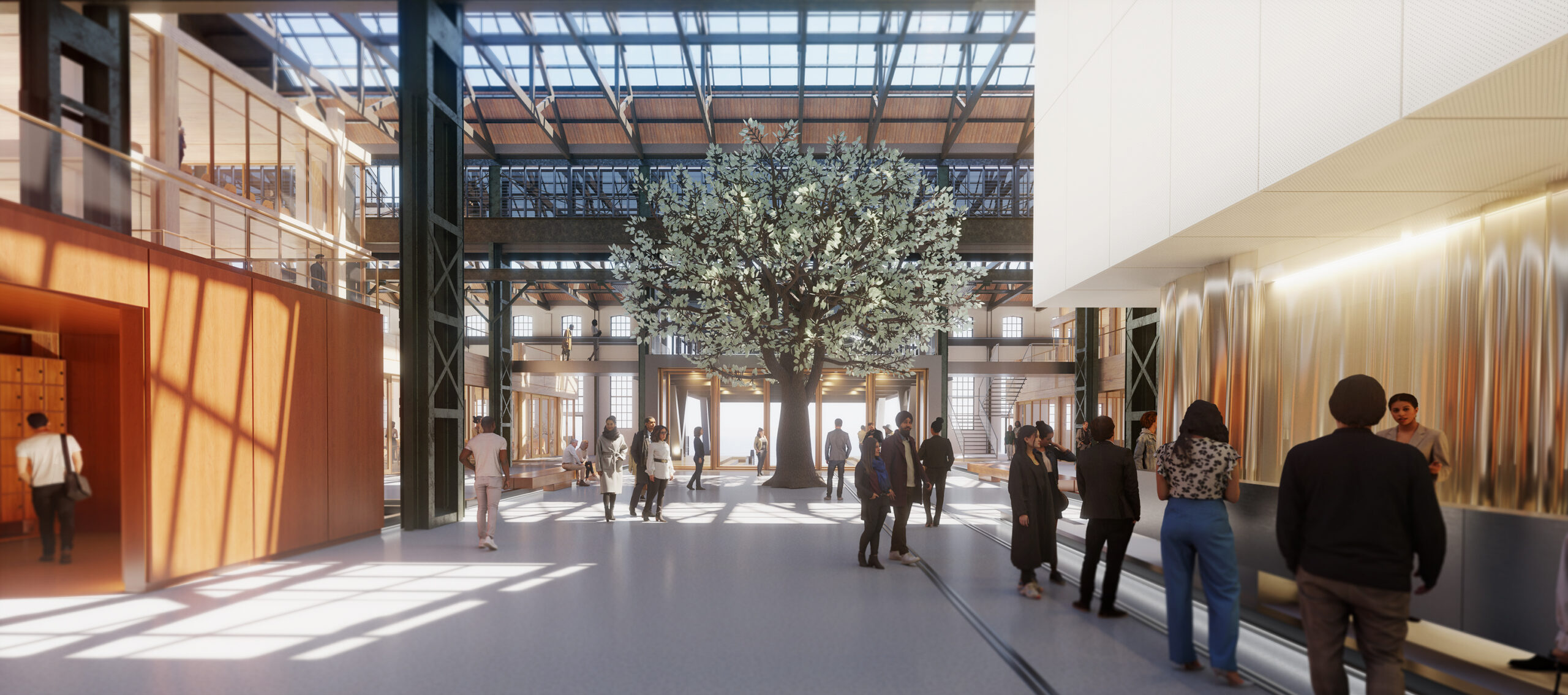
Transforming this industrial monument into a cathedral of contemporary art and culture is the main goal on this project . Understanding the elegance of the old structure
The project aims to create an iconic destiny for people all over the world and to give a new life to this remarkable dutch heritage building.
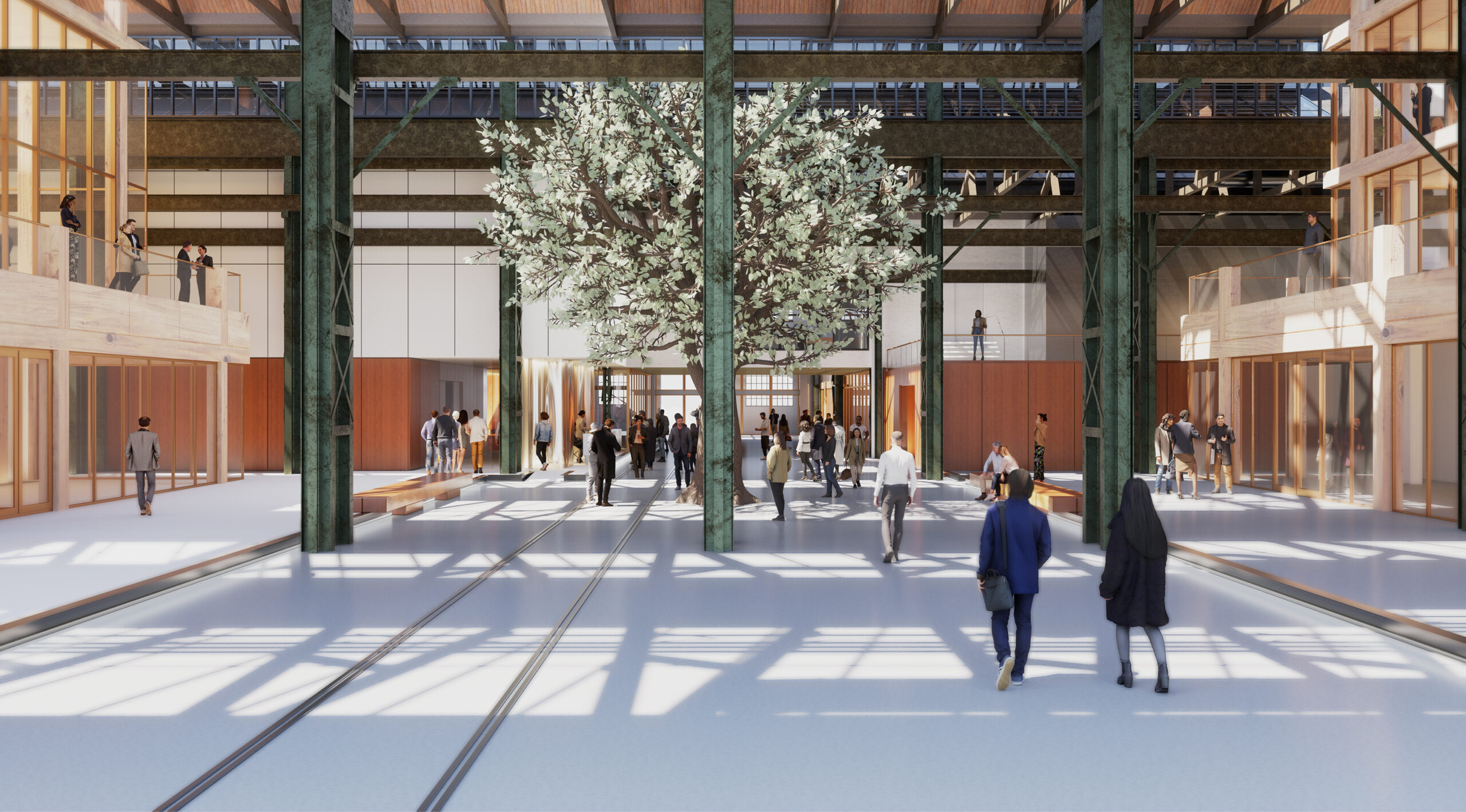
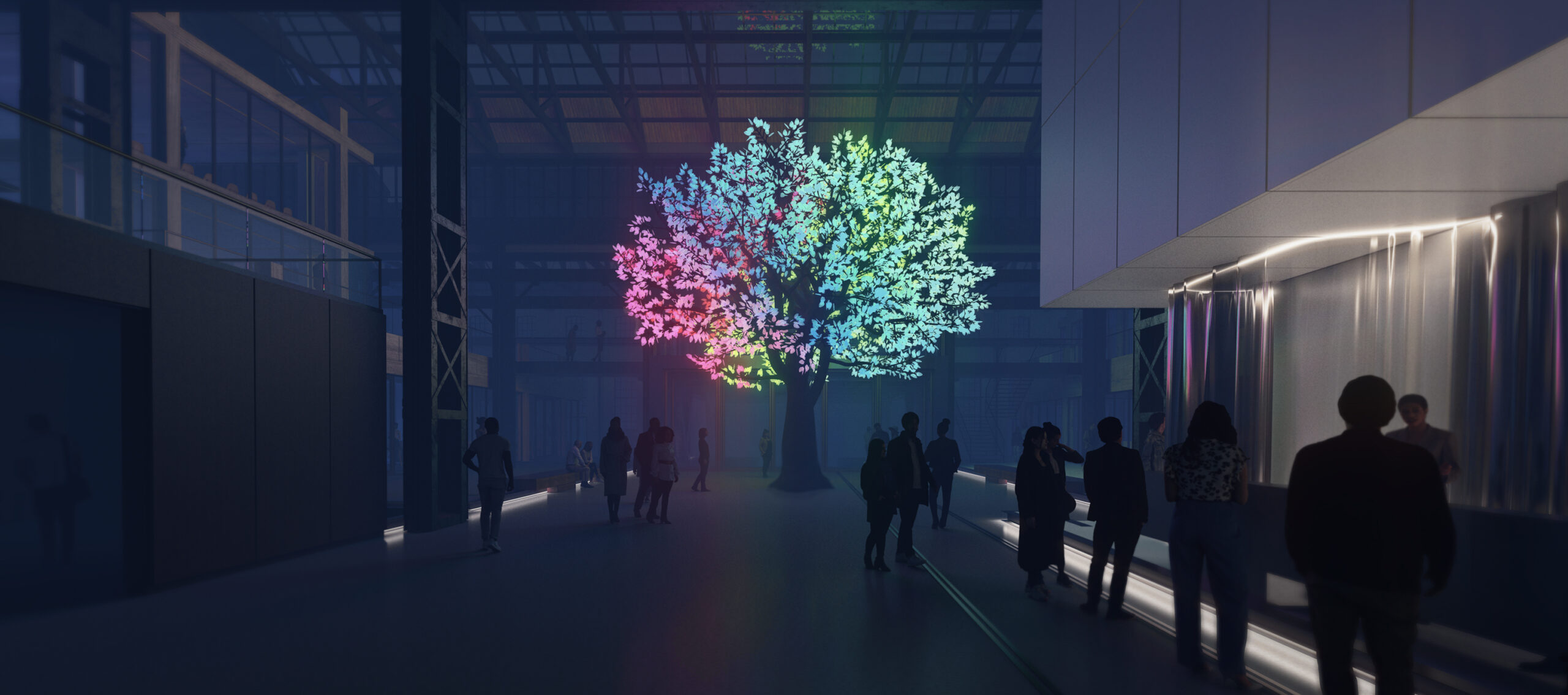
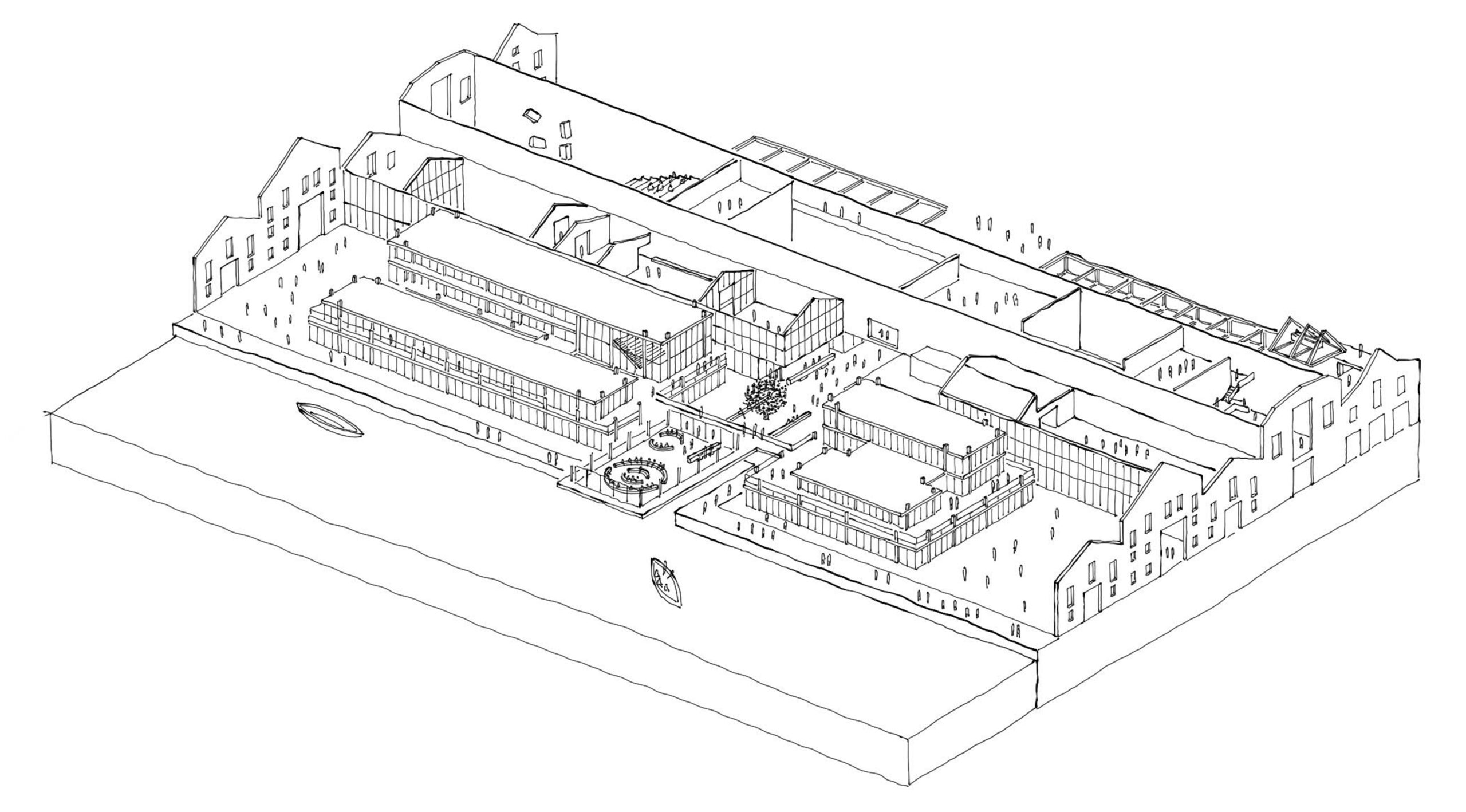
The building will accomodate different functions distributed on the five historical halls . There will be a public central avenue connecting all the different parts of the new program.
The new main functions are office spaces (Hall I B , Hall II B , Hall V A and B) , restaurant (Hall I A and Hall II A) , café / event (Bok) , DRIFT Museum (Hall III and Hall IV ) , Parking (Hall IV and Hall V A) and a few apartments .
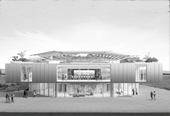
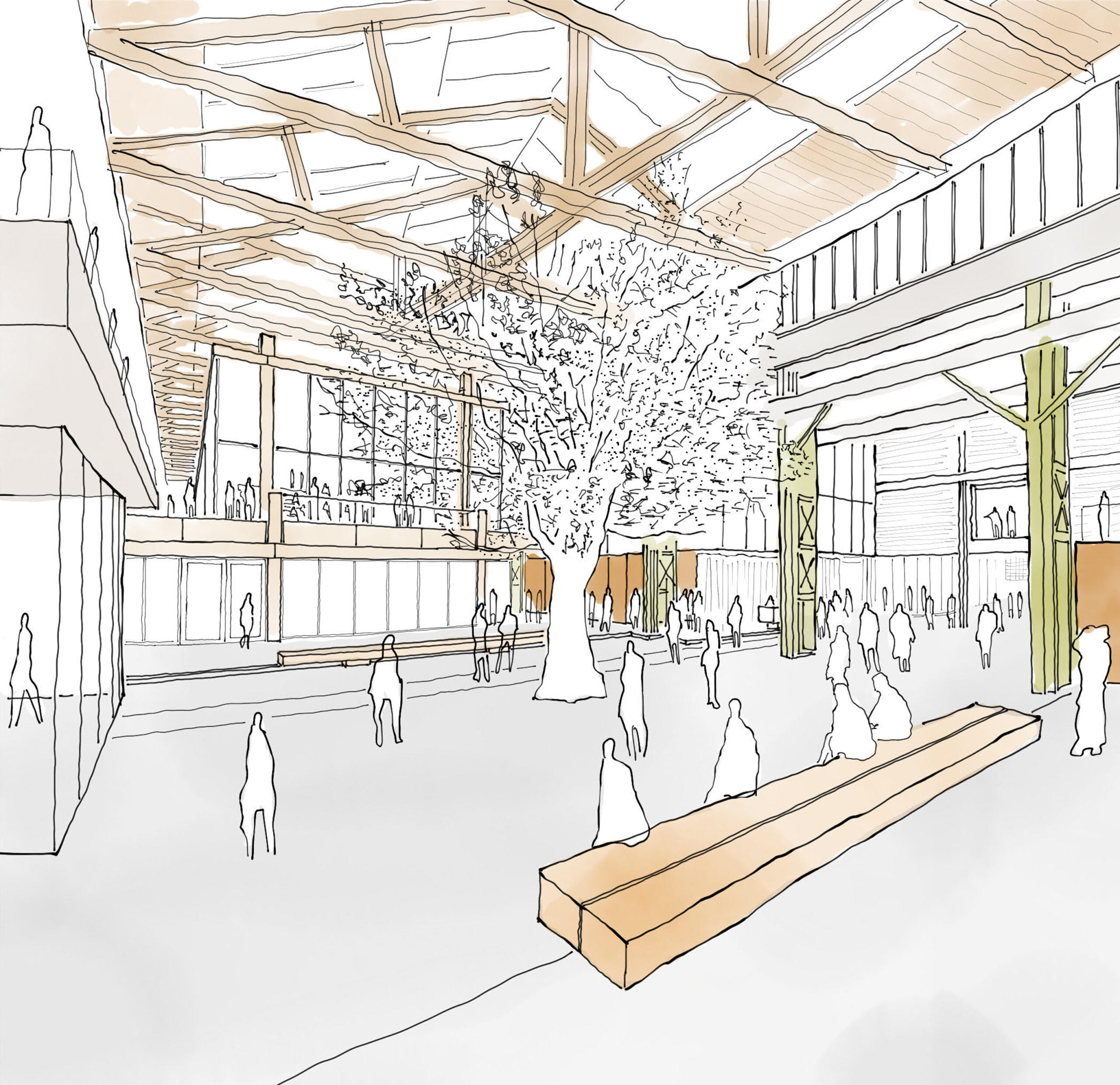
The architectural constructive solutions on each hall respond the the function happening inside the new volumes that are being built . Hall I , Hall II and Hall IV will be mainly office spaces and restaurant. The proposed construction consist on a modular system of CLT Cross Laminated Timber , finished in a very light wood tone . The CLT is a very clean and sustainable material that will create serenity in within all the things that are already happening in the existing building. There are big openings so people working on the office can have a visual relation with the central avenue and from the central avenue the visitors can see all the activity happening on the different structures can be celebrated ..
The CLT structure has been carefully composed with pillars and beams with a section that dialogues with the sections used at the old structure, it is almost a contemporary interpretation .
The new CLT structure is respectfully positioned in such a way that never touches the old , it is a self standing structure.
Materially, we wanted to bring as much lightness to the interior of the building, that is the reason why light wood color was chosen . We believe that the colors (green , yellow, dark brown,…) of the old structure are been highlighted by the choice of the light wood . We wanted the old structure to be the protagonist , but at the same time we wanted to propose a strong new language with a strong personality .
We wanted to create a contrast with the rhytm of the windows on the CLT part, the windows being darker brown color and where all the details were very carefully worked out and crafted . This darker brown is clearly in dialogue with the dark brown of the old beams inside the building .
In Hall I and Hall II, A side , there will be a restaurant built with the same material CLT Cross Laminated Structure composition as the one on B side . A very transparent and inviting structure to welcome the visitors to the restaurant , that will be visually connected to the famous Tree of Tenere by Studio Drift . The composition of the CLT structure has been inspired by DRIFT´s work Fragile Future , where corners are open.
The access to the bar will be through the central avenue , where there will be a reception desk inviting the visitors go in the restaurant . In order to control the temperature of the restaurant, there will be some doors, built with exactly the same wooden frames as the whole facade.
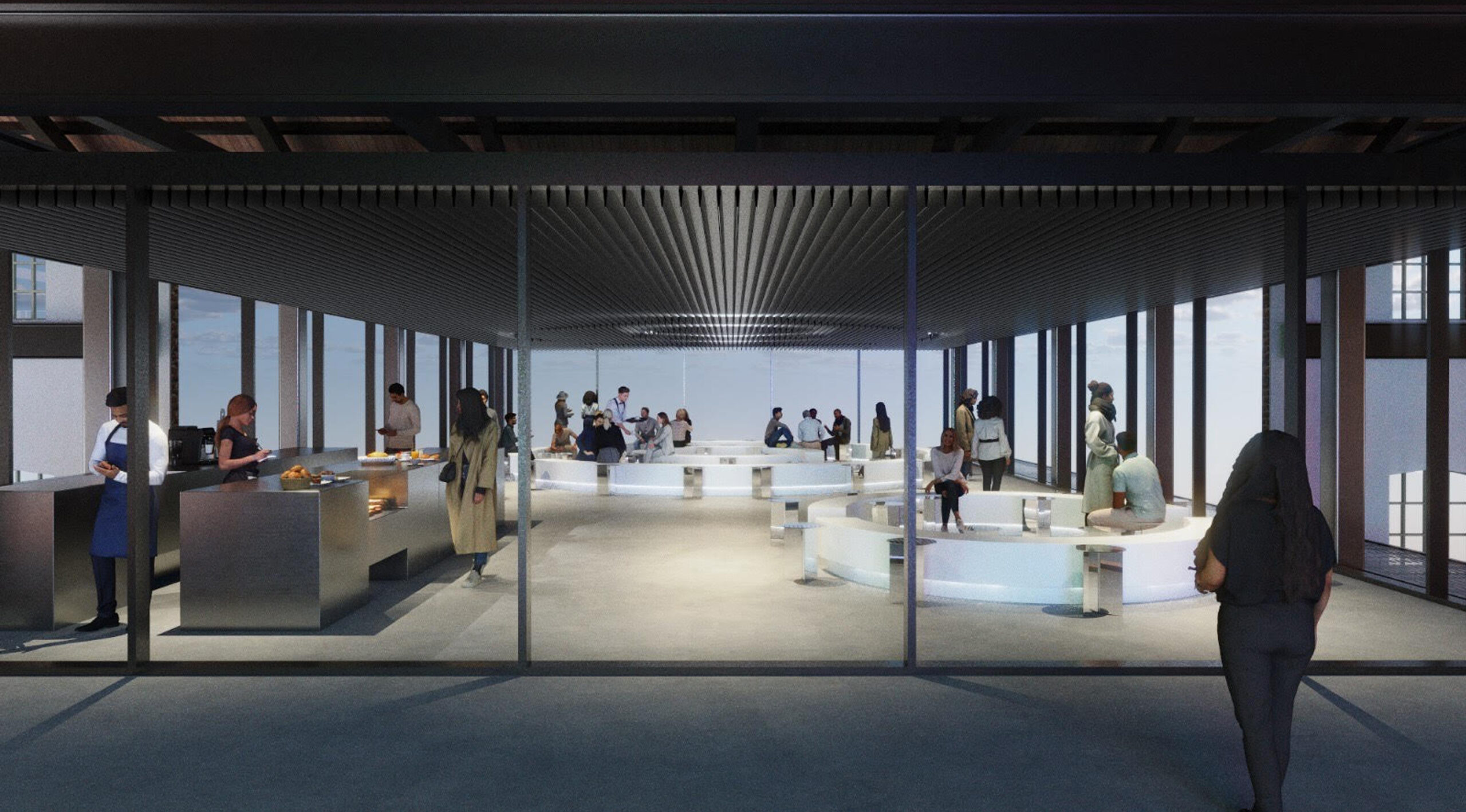
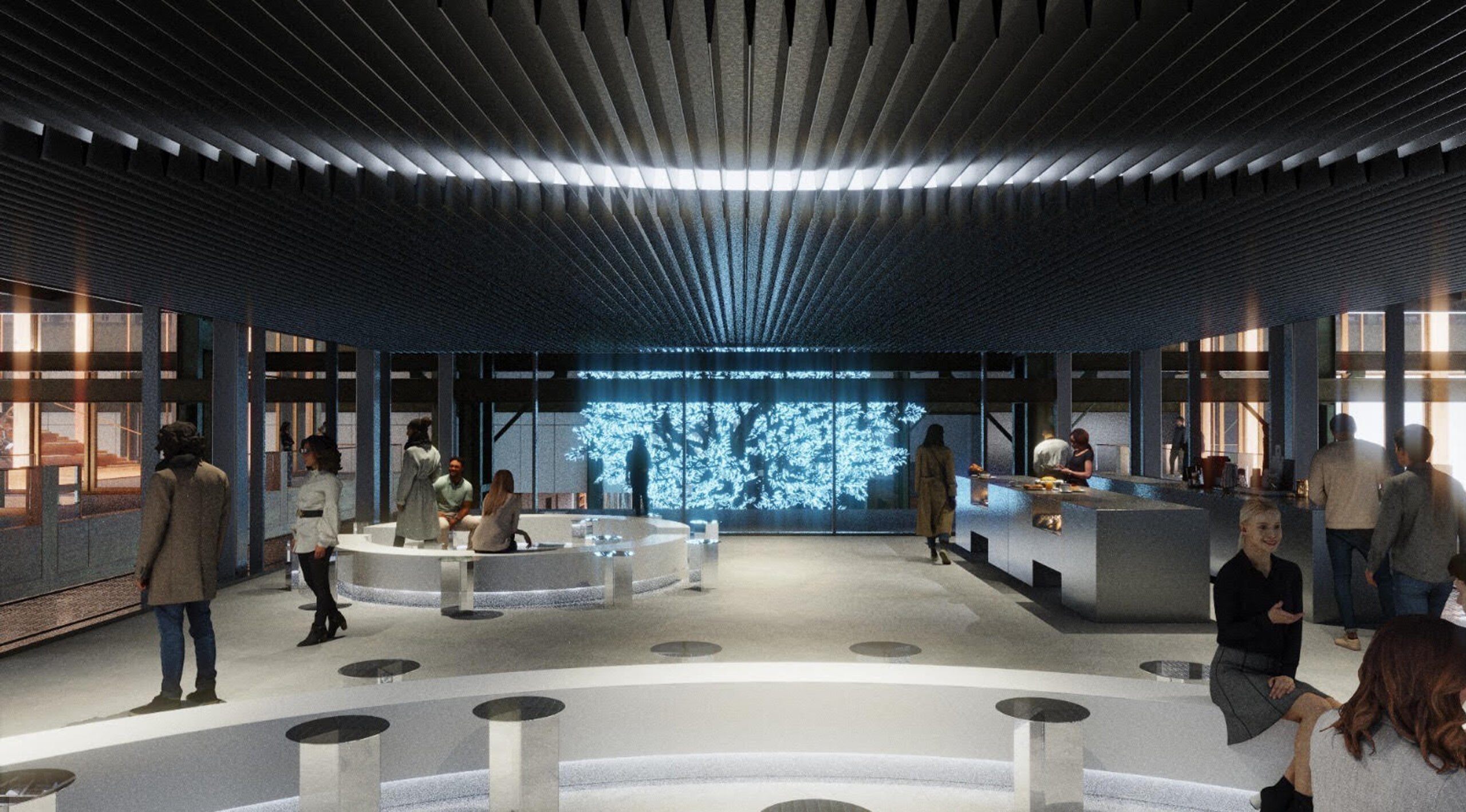
The restaurant has been conceived as an organic landscape , kind of a forest of light, with curved sitting areas that will generate different more intimate dining areas . There will be a central bar , carefully designed and built with the same wood color as the facade window frame , in this case , with beautiful slats of 20 mm each, handmade and custom made specifically for the occassion., celebrating the craftmanship that we clearly wanted to implement on the building and cleary resembles and resonates with the history of the building .
The furniture inside the restaurant will be lighter wood and there will be a slightly higher level from where the guests can see through the windows .
The floor will be concrete, as in the rest of the building .
The old is structure will be visible on the entire restaurant .
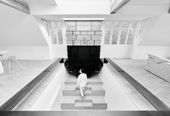
The staircase connecting the central avenue and the bok is built in steel . It is a carefully designed staircase , very generous and elegant in the width , 1.80 m wide , and with glass handrails .
We decided to re-positioned it, to make sure all the old pillars were visible and seen and the staircase won´t obstruct the veiw to them.
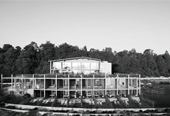
The BOK is the only volume sticking out the facade and we wanted to celebrate that fact creating a very strong concept on the inside . We are creating a big circular furniture piece where visitors to the Museum and neighbours come together to drink coffee/tea . This eye catching circle will be lifted up in the evening to leave a totally open space allowing flexibility to host all kind of events . The circle then will be on the ceiling and will become a chandelier illuminating the hole space .
DRIFT MUSEUM
“A clean elegant architectural language that is in perfect harmony with the work by DRIFT “
“The museum is not just a container for artworks; it is a meaningful space that resonates with DRIFT’s ideas and transforms how visitors engage with them.”
DRIFT MUSEUM is located in Hall III and Hall IV , in around 8000 sqm.
As architectural firm , we have always been very inspired by DRIFT . Their endless creativity and magical work have been a very important source of inspiration for our studio .
DRIFT artworks are always born from very strong concepts generally linked to nature and technology .
In the same way , our architectural approach is to work with concepts that are the driving force for the different projects .
On this project it was very important for us to use this opportunity to create a clear dialogue between the art and the architecture . It was obvious that the DRIFT Museum should be related and recognizable to their work , with a very strong and clear identity .
While studying there prolific ideas and concepts there were endless stimulus to work with .
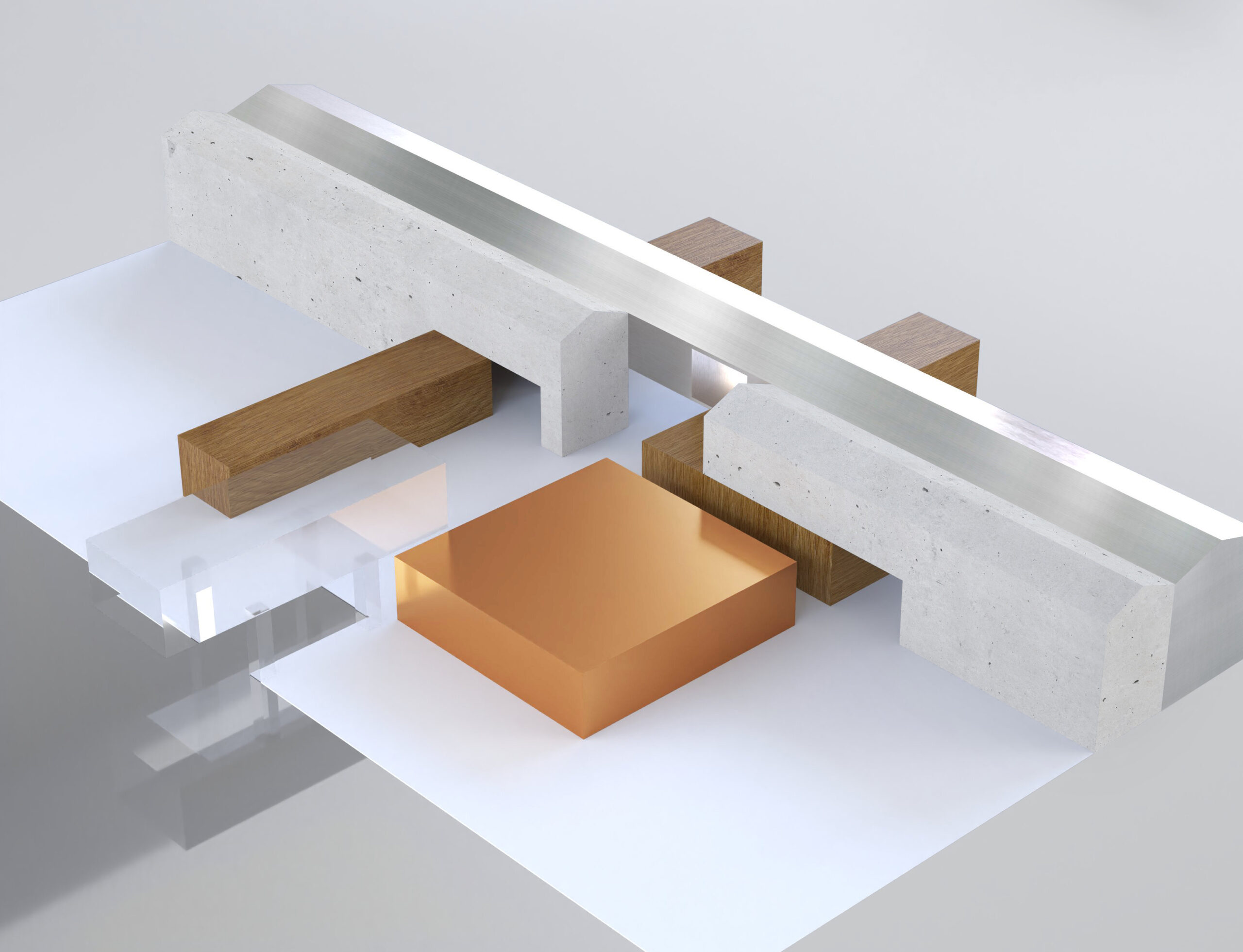
From the very beginning , we decided to look at DRIFT´s Materialism artwork and fanstasize to create a giant scaled up version of that project in the entire building.
We wanted to pay tribute to all the materials and proportions that DRIFT have been using overall these 15-20 years of existence .
The project is a carefully curated volumetric composition of different materials associated to the worlwide well known dutch duo work.
Our goal has been to achieve a systematic architectural logic , that brings consistency and coherence over the entire Museum. All the different architectural elements have been very carefully composed establishing a recognizable rhytm all over the Museum.
The magnificence , the scale and the generosity of the building allowed us to design the sequence between the different spaces on a more free and fluid way , and enhance us create very interesting visual and spatial connections between different artworks .
We believe that the DRIFT Museum will allow the visitor experience the artworks on a way that has not been seen before .
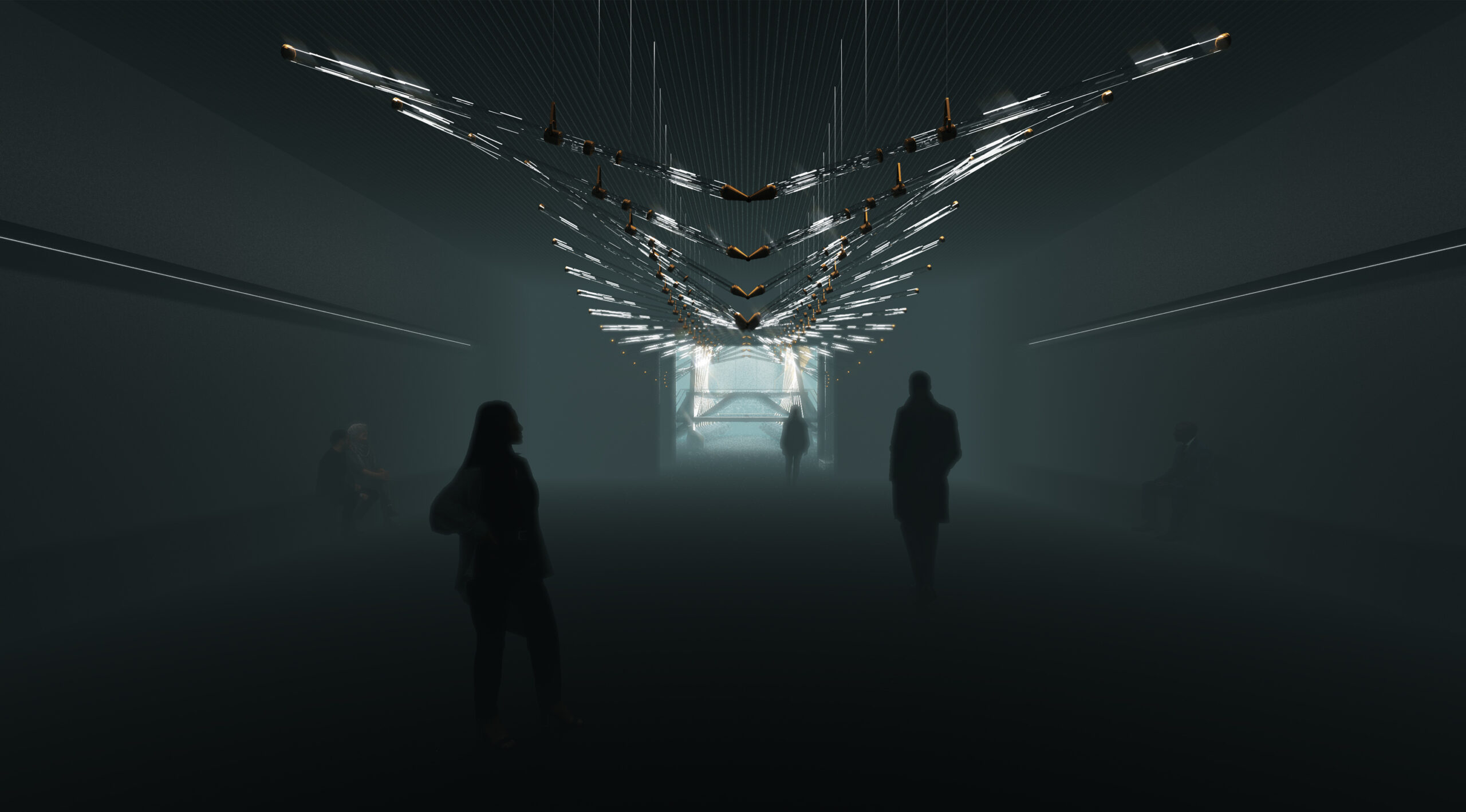
Some spaces are very high ceiling and some are lower , there is a clear intention to expand and contract the area depending on the requierements of the artwork, and how the artists believe the conditions areound the art are the most suitable for the visitor to experience it.
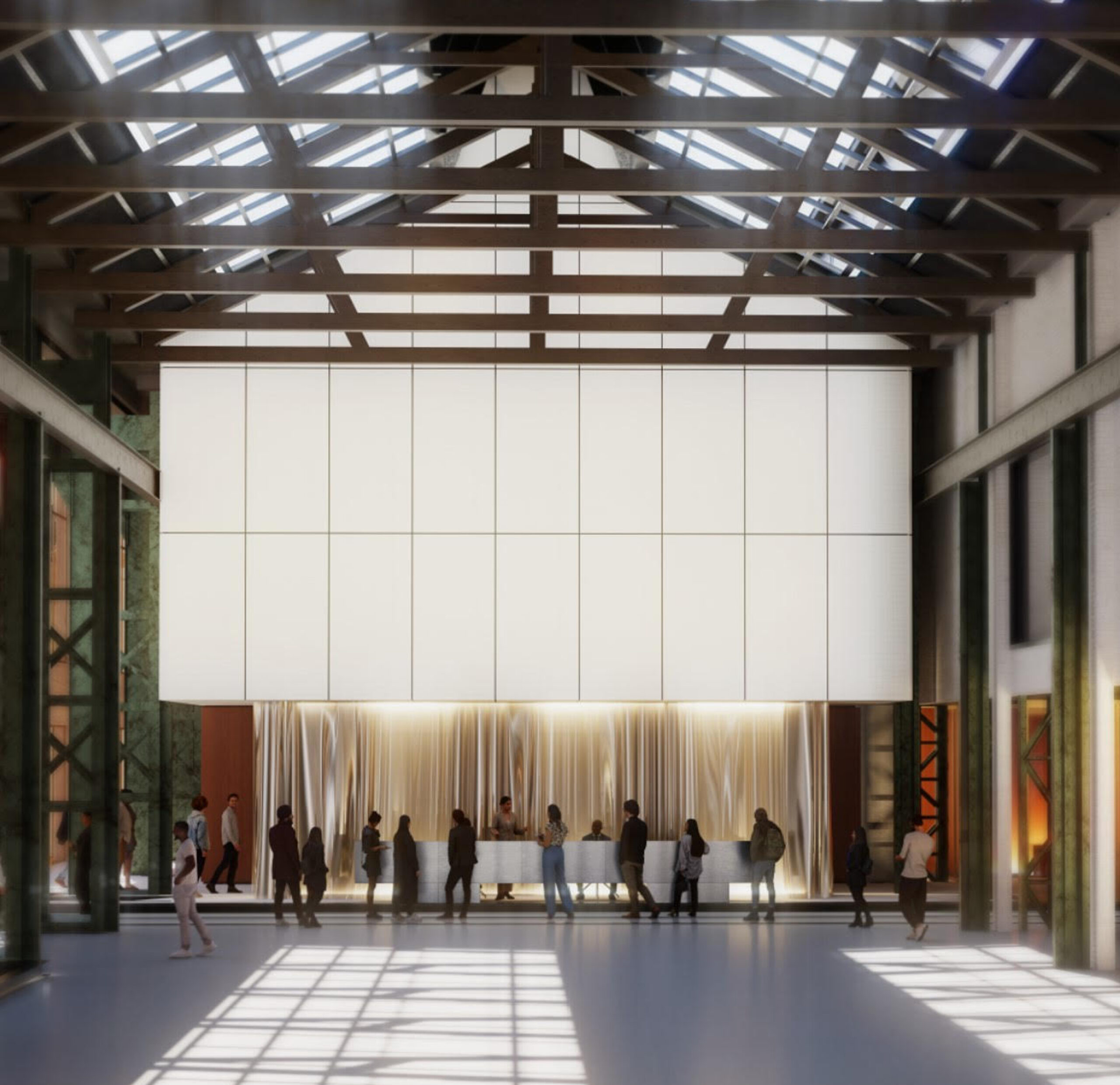
The architecture of this Museum is all about creating the right neutral silent and serene atmopshere for the art to be the protagonist . All the details are very carefully resolved , starting from the solid elegant welcoming reception, all inner facades of the building and the vertical communications as the staircases .
It is an interesting geometrical exercise , where clarity and cleanness of the space and all the openings between the different areas are visible in the layouts .
There are beautiful moments across the entire Museum , as the double height space in world transformer , the visual connection between “in 20 steps” and “moving pavilion” , the aerial view of “moving pavilion” while entering to “Fragile Future” .
The Museum has been designed to be active after the Museum opening time.
As an example , we have created the possibility to connect physically three big spaces (Drifter-Drifter Movie – Shylight) and generate one giant space at two heights that will offer endless possibilities for events or parties .
The Shylight space is a very big double height space that can be enjoyed from different levels and from where there will be a visual connection to the central avenue .
All the staircases are carefully designed following all aesthetics of the entire Museum . The most spectacular is located at Ego room and will allow visitors go up in two different directions on a X shape sculptural staircase . All of them have been built in steel and will have a RAL 8022 dark color.
We understand the shop as the extension of the different art exhibition areas that will be visible from the central avenue . We are creating a sculptural solution based on different blocks from different sizes that will display all the ítems . It is almost like a big materialism piece that people will recognize while walking through the central avenue and will somehow resonate with the whole concept of the entire building. The shop and the reception are next to each other , and the materiality chosen for the furniture on both is brushed stainless steel.
There will be a part in the shop that will be entirely built in dark wood , the same wood that will be on the Museum main entry and on the lockers facade . We wanted to create this clarity on the language so people could clearly recognize that those were part of the Drift Museum.
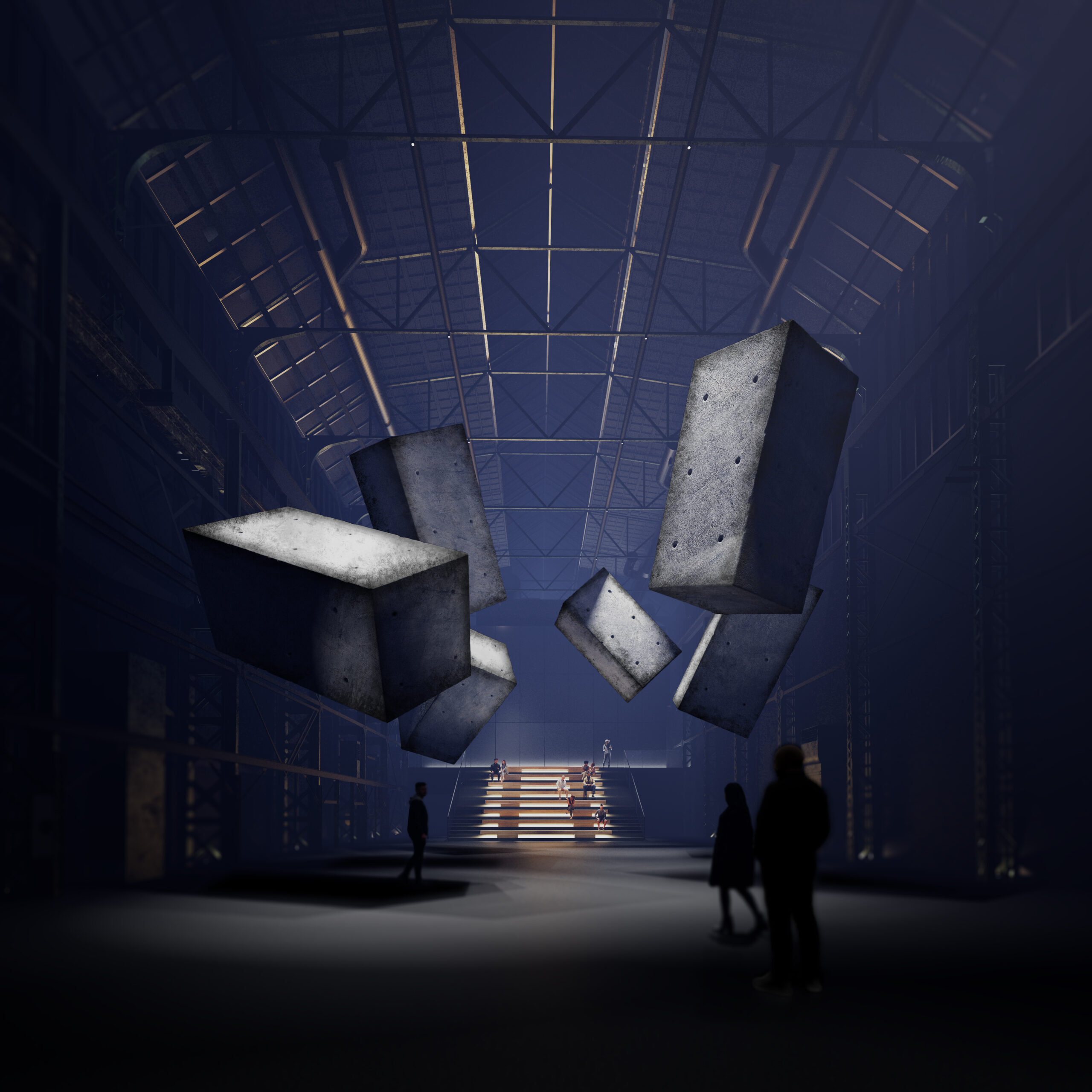
The Museum is entirely dark, since the light of the artworks should stand out and was a very important condition by the dutch duo Studio Drift .
We found a systematic language on the materiality , the cross facades of the halls will be built with Vinci Acoustic panel, that are by nature a dark color, similar to RAL 8022 .
All the ceilings inside the Museum will be done with the same Vinci panels. We have worked out the whole composition of the facades so the entire language in the Museum is consistent, coherent and recognizable , so generates this peacefulness and serenity for the visitors to focus on the artworks.
The long sides that are newly built , they will be painted in RAL 8022.
The long sides that are preserved , will be untouched and we will preserve the original walls .
Summary
The new architectural language established on the building pretends to celebrate the old monumental structure , and to allow a new life inside by creating new functions adapted to the new era .
However, the proposal is willing to preserve the desire for innovation and entrepreneruship that is part of the DNA of the building .
The new architecture proposed is very respectful with the old but it has a very strong personality .
The constructive elements chosen are in dialogue with the old structural elements . We have composed not only the size of the profiles of the pillars and the beams with the existing ones, but we believe that the color palette chosen fits really well with the patina of the old .
The project is a volumetrical composition of materials almost revealing the new functions that the new proposal will accomodate . Some , as the offices and the restaurant, are more transparent and open to the central avanue, while others, like the DRIFT Museum are more opaque and trigger the curiosity of the visitors to come inside and explore the different art exhibition spaces .
The different constructive solutions are , somehow, responding to the functions , that is why , Hall I , II and V have a lanaguage , and Hall III and Hall V have a different language .
But the combination of both not only materially but also as functions will make the building alive and vibrant .
There is a certain warmth on the materials chosen that work beautifully with the old building . The dark brown wood in the windows but also on the facade ofthe entry of the Museum or the shop panels are clearly resembling with the dark brown of the old beams . The dialogue is very evident while walking inside the central avenue .
Architecture is the dream that you build by making many many good decisions and being capable to listen what it was there before , and trying to add something to compliment it and make it even greater .
As an architect is a pleasure to work with an innovator and great thinker as Eduard Zanen and his whole Team to give a new life to this historical building . We all spend time listening to what the building demans and our choices have been made very carefully after drawing and researching many options , and learning from many similar buildings that are already very succesful .